Speeding on residential streets is a concern I hear about from residents across Barrie, and it is especially important around schools, parks and neighbourhoods where children and families are walking and biking.
A common question is: How does the City of Barrie decide where to put speed bumps?
The answer is that the City doesn’t simply install a speed bump because someone requests one. There is a process for identifying speeding concerns, collecting traffic data and determining which traffic-calming measures are appropriate for a particular street.
Barrie Uses Traffic Calming, Not Just Speed Bumps
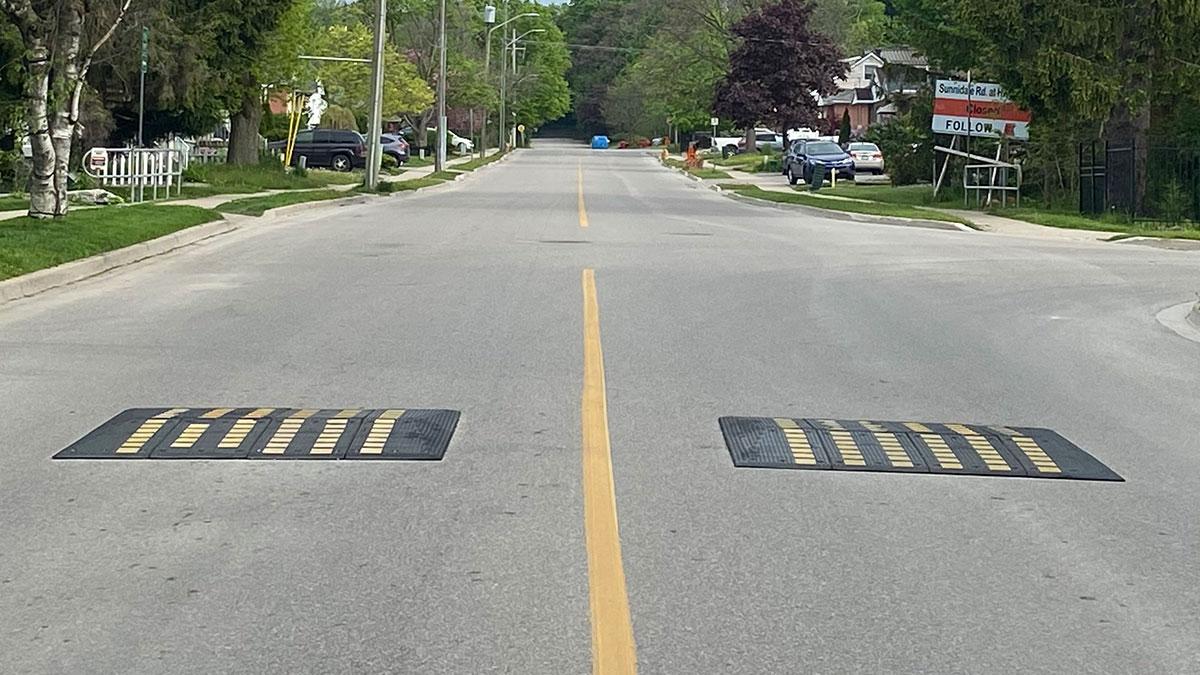
What many of us call “speed bumps” are generally referred to by the City as speed cushions.
Speed cushions are designed to slow regular passenger vehicles while reducing the impact on larger emergency vehicles.
They are only one of several traffic-calming tools Barrie can use.
Depending on the street and the problem being addressed, traffic calming can include:
- Speed cushions
- Flexible bollards
- Planters
- Radar speed boards
- Lane or roadway narrowing
- Other changes to the design of the street
The right solution depends on the road.
How Does a Street Get Considered?
Residents experiencing speeding or traffic-safety concerns can bring the issue to their ward councillor.
From there, the City’s Traffic Services staff can investigate the location and determine what action may be appropriate.
One of the most important parts of that process is data.
Radar speed boards and other traffic monitoring methods can provide information about vehicle speeds and traffic volumes.
That helps answer some important questions.
How fast are vehicles actually travelling?
How many vehicles use the street each day?
Is speeding occurring occasionally or consistently?
Is the road being used as a shortcut?
Are pedestrians, cyclists or school children particularly affected?
Before we decide on a solution, we should understand the problem.
Not Every Street Is Suitable for Speed Cushions
There are also practical considerations.
The City has to consider the classification of the road, traffic volumes, transit routes, emergency vehicle access and winter maintenance.
Barrie specifically considers transit operations when determining locations for speed cushions and, where possible, avoids installing them on transit routes.
Snowplowing also matters.
A traffic-calming measure that works in July still needs to work during a Barrie snowstorm in January.
That is why the solution for one street may be speed cushions while another street may be better suited to bollards, radar speed boards, enforcement or a different road design.
Traffic Calming Is Already Being Used in Ward 1
Ward 1 provides several examples of the different approaches Barrie can take.
The City has used speed cushions on streets including Colleen Avenue, Cook Street, Hickling Trail, Maitland Drive, Napier Street, Penetanguishene Road, Steel Street and Sydenham Wells.
Flexible bollards have also been used on Blake Street and Grove Street, while pedestrian-focused measures have been used near Johnson Street Public School.
There are also permanent speed cushions on Codrington Street.
These examples demonstrate something important: there isn’t one solution for every street.
My Approach: Identify. Measure. Fix. Report.
I believe we can make the process clearer and more accountable for residents.
My approach to neighbourhood traffic safety would be:
IDENTIFY
Listen to residents and identify streets where speeding, pedestrian safety or traffic volume is creating a concern.
MEASURE
Work with City Traffic Services to collect actual speed and traffic-volume data.
FIX
Use the evidence to determine the appropriate response, whether that’s speed cushions, bollards, improved crossings, signage, enforcement or another traffic-calming measure.
REPORT
Tell residents what was found, what action is being taken and whether the solution actually worked.
That last step is important.
If we install traffic calming, we should measure the results afterward.
Did average vehicle speeds decrease?
Did excessive speeding decrease?
Did traffic simply move onto the next residential street?
Did pedestrian safety improve?
Residents deserve to know.
Safer Streets Without Making Empty Promises
As a councillor, I wouldn’t promise to put a speed cushion on a particular street before the engineering work and traffic data support it.
What I can promise is a process.
Listen to the concern. Get the data. Push for the appropriate solution. Report the results.
Our residential streets should be designed and managed with the people who live on them in mind.
That is particularly important around our schools, parks, trails and neighbourhoods where children, seniors, cyclists and pedestrians share the road with vehicles.
If you’re a Ward 1 resident and there is a street or intersection you believe needs attention, I want to hear about it.
Share your concerns with me and tell me where you think we need to take a closer look at road safety in Ward 1.
Read Who is Who is running for ward 1 councillor Barrie